
Veteran U-2 and SR-71 pilot Maj Gen Pat Halloran has died at the age of 95. He was a legend throughout the Blackbird and Dragon Lady community, and his passing will no doubt be marked by heartfelt tributes. I first met Pat nearly 40 years ago, and he has been a steadfast supporter of my efforts to chronicle the history of the Dragon Lady.
Pat was one of the many F-84 pilots who were chosen for the U-2 program in 1955-57. He had flown 100 combat missions in that early fighter jet during the Korean War. He joined the USAF U-2 wing at Laughlin AFB in June 1957, and flew the Dragon lady for nine years, amassing a total of over 1,600 hours.
In December 1965 he transferred to the 9th Recon Wing at Beale AFB and became one of the first pilots to check out in the SR-71. He flew the Blackbird for four years, accumulating 600 hours on type. After Air War College and a staff job at HQ Strategic Air Command (SAC), he returned to Beale in July 1972 as vice-commander of the 9th. In May 1973 he became the commander.
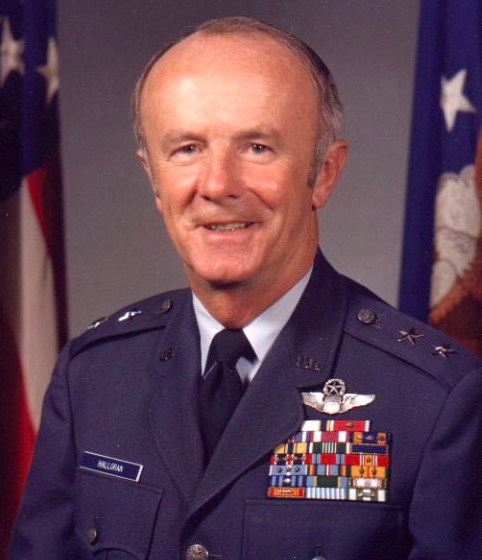
From July 1975 Pat worked in staff jobs of increasing importance at SAC. He ended his career as the Deputy Director for Command, Control and Communications on the Joint Staff in the Pentagon.
After retirement from the Air Force, he became a leading participant in the Experimental Aircraft Association (EAA). He was the lead pilot for a replica of the De Havilland Comet racing airplane of the 1930s, which was almost as difficult to fly as the U-2! He owned and flew a Lancair experimental aircraft.
Pat’s advice was regularly sought by Air Force leadership. In 1997 he was one of six members of the so-called Graybeard Panel that was commissioned to examine shortcomings in U-2 operations.
He was a regular attendee at U-2 and SR-71 reunions, and was mobile and alert until the very end. In 2005, he wrote the Foreword to my book 50 YEARS OF THE U-2. In it, he well describes the trials and tribulations of flying the Dragon Lady. If you are reading this post on a computer, you can download it below.
Blue skies, Major General!
 Dragon Lady History
thanks for the Halloran history!
LikeLike
In the mid 60’s I was a young Royal Australian Air Force officer based at RAAF Laverton. I met the then Major Pat Halloran in the officers mess (club you might say) and he took an interest in me and invited me to see preparations for flights. A U-2 was stationed on our base. The aircraft were taking upper atmosphere air samples to see what radioactive contamination there was due to the French atomic bomb tests in th pacific. Mind you he did not tell me that at the time, something I was to learn later. In those days there were no pogo wheels for the wings and a couple of airmen would walk along with the taxiing aircraft holding the wing tips. Full power, brakes off and the airmen would run like hell for about say 10 yards and the bird would lift off and CLIMB. They did not use a chase car for landing but another U-2 pilot would talk the aircraft down. Apparently the fuel balancing in the wings was done without appropriate gauges. The U-2 would taxi back to the tarmac and upon stopping a wing tip would almost lazily come to rest on the ground. Class.
I remember Pat to this day. He was generous and a gentleman. I am sad that he has passed away. I am myself 82 years of age.
I might add the the U-2 was replaced by an RB57F, an enormous wingspanned aircraft and operated out of RAAF East Sale where the U-2 was first based.
LikeLike
A belated thanks for the profile on Pat Halloran! Seeing him again at the last U-2 reunion was a high point of the event!
Duke Woodhull/Solo224
LikeLike
Very nice to see these heartfelt farewells for our amazing crew members of these special programs.
Dan Freeman, USAF (ret) SR-71 / U-2 Machinist, 9th MS, Metals Technology Section Chief.
LikeLike